

Moncunill Lab
General description
The Moncunill Laboratory studies the mechanisms required to induce long-lasting protective immunity and the factors that drive interindividual variability in vaccine responses. The group investigates how pathogens and environmental exposures shape the immune system across the lifespan and influence responses to vaccination and infection at cellular, humoral, and molecular levels.
Combining experimental immunology with high-dimensional cellular profiling, single-cell multiomics, computational modelling and well-characterised cohorts, the team adopts a systems-level approach to human immunity. Their research pays particular attention to the diseases affecting vulnerable populations, such as malaria and noma, as well as the identification of immunological biomarkers for diagnosis and prognosis in infectious and post-infectious conditions, including long COVID.
Projects
Understanding the heterogeneity and function of monocytes in vaccination and immunity to malaria (VaMonoS) (PID2022-140479OB-I00) Ministerio de Ciencia e Innovación de España. PI: Gemma Moncunill. 2023-2026. Investigating the aetiology, pathology and epidemiology of Noma in Africa. (Hilfsaktion, Germany). PI: Suart Ainsworth (University of Liverpool, UK); Gemma Moncunill (Immunology WP Leader). 2025-2029.The Moncunill Laboratory studies the mechanisms required to induce long-lasting protective immunity and the factors that drive interindividual variability in vaccine responses. The group investigates how pathogens and environmental exposures shape the immune system across the lifespan and influence responses to vaccination and infection at cellular, humoral, and molecular levels.
Combining experimental immunology with high-dimensional cellular profiling, single-cell multiomics, computational modelling and well-characterised cohorts, the team adopts a systems-level approach to human immunity. Their research pays particular attention to the diseases affecting vulnerable populations, such as malaria and noma, as well as the identification of immunological biomarkers for diagnosis and prognosis in infectious and post-infectious conditions, including long COVID.
Understanding the heterogeneity and function of monocytes in vaccination and immunity to malaria (VaMonoS) (PID2022-140479OB-I00) Ministerio de Ciencia e Innovación de España. PI: Gemma Moncunill. 2023-2026.
Investigating the aetiology, pathology and epidemiology of Noma in Africa. (Hilfsaktion, Germany). PI: Suart Ainsworth (University of Liverpool, UK); Gemma Moncunill (Immunology WP Leader). 2025-2029.
Principal investigator

Gemma Moncunill
Consolidated Group Leader
Group members
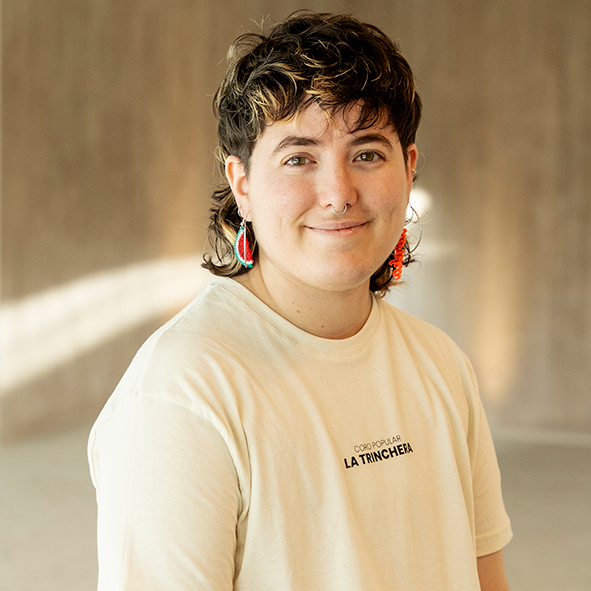
Carme Rodríguez
Lab Technician

Elise Suzanna Saager
Postdoctoral Researcher
Guillem Sánchez Sánchez
Postdoctoral researcher
Mar Canyelles Pascual
Predoctoral Researcher